Is EMS REALLY for you?
- budgetsoutherman
- May 13
- 6 min read

How it all begins

Have you pictured it? You know what I'm talking about. Being there. Instead of paying attention to derivatives of theories or whatever lecture is in front of you, you're thinking about a horrific moment. Citizens calling 911 at their worst times, and you showing up to make that difference.
This thought comes to many, and it all diverges down different paths. Some go into private EMS, where they spend their days feverishly moving patients from one facility to the next in order to make room for a never-ending sea of patients coming FROM the ER. Some go into the 911 system, where they spend their days bringing a never-ending sea of patients INTO the ER. Some may try EMS short-term and then decide to go into a completely different field.
Regardless
of the path people take, aspects of the job are either overglamorized or not talked about enough, as it's uncomfortable. Luckily, I'm anonymously hiding behind a screen, and I'll be unleashing my true, unaltered thoughts about life in EMS right out of school! There is a TON of information to be discussed in every section. As this is just a quick outline, I will be going into much more detail down the road in other pieces.
Financial Aspects of EMS

As much as all your loved ones/ professors tell you that you should do what you love, please, for the love of god heavily consider this. I'm sure you are a witness to seeing how the majority of individuals who chose psychology/ sociology in college or computer science are currently operating in today's world. NOT GOOD.
EMS jobs are plentiful. You can get hired quite easily once a few prerequisites are met (more on that later). The caveat is that, as the barrier to entry is low, the pay will typically reflect this. If you are able to find a system that combines Fire with EMS, then it's likely you will be able to get paid more, along with the benefits that come with it.
Your private EMS or hospital positions as of 2026 in South Florida seem to have a starting pay of around $16- $24 dollars an hour. If this is your 40-hour work week, this translates into $33,280 - 49,920 a year. Most of these jobs tend to have overtime, so if you have the time to work, you will typically be compensated 1.5x your hourly rate (if you make $20 an hour on overtime, you will make $30). These jobs will typically have a 401 (k) that you contribute to for retirement.
If you decide to go the firefighter/EMT route, you can expect to make an average of $43,500 to $66,000 a year. These departments will typically have a pension for you to contribute to for retirement. Due to there being more schooling and a more hazardous work environment, working in the latter profession typically yields better pay and benefits down the road. The main benefit of having a pension over a 401k is that pensions provide a guaranteed lifetime monthly income. 401 (k) s are typically employee-funded and can run out. You can essentially choose between a guaranteed monthly payment for life or a lump sum withdrawal/ managing your own withdrawals throughout the remainder of your life.
Mental and emotional Toll
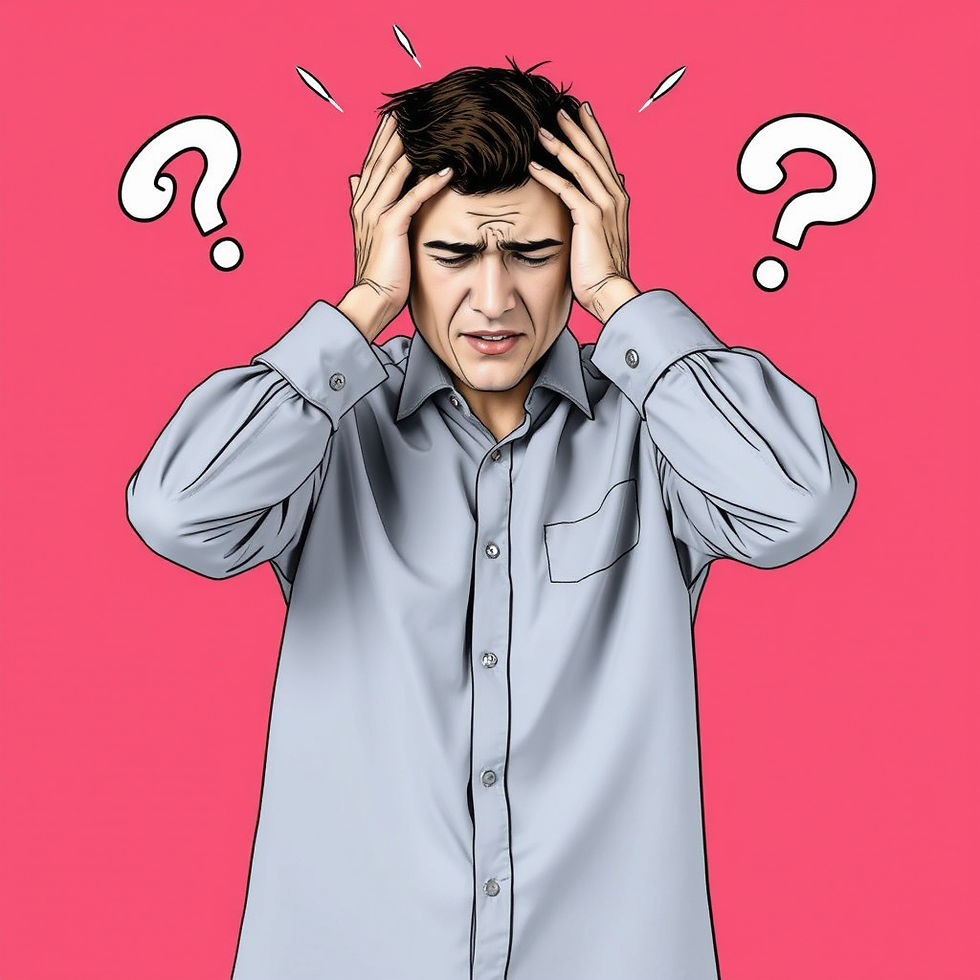
This line of work tends to affect everyone a little differently, but no matter who you are, it will take a toll on you. It will take a special person to be able to endure the moments that can be encountered while in this field. If it's something you are passionate about, you may, over time, figure out ways to deal with all the baggage that comes with the job. No one is spared, no matter how strong a face they put on.
Those who are on the private side who do interfacility transfers, you will be a witness to how the family handles their private hardships. You may see the stark comparison of how the patients hold themselves up to be strong for the families, while you obtain the true details of the consequences of the situation they are in.
Those who venture straight into the 911 culture will often be first on the scene of the emergency. You will be expected to handle the situation professionally, calmly, and with urgency. You will potentially see people in their last moments, family members not understanding the urgency of the matter, or, more commonly, individuals not understanding the overuse and abuse of the system. These are all situations you may come into that will affect your mentality in the long term.
Studies have shown that 10%-35% of EMS personnel suffer from PTSD. Studies are also showing we are significantly at a higher risk of suicide than the general population. I believe this can be due to many factors. You will deal with some traumatic calls and times in your time working. The longer time away from families is also hard on individuals. If you are working 24-hour shifts or longer, your sleep and circadian rhythm get disrupted significantly. The recovery afterwards is often not enough to fix it, so you end up in a downward spiral of restlessness over time. People often turn to stimulants to give them the energy to go on. You then see workers often turning to unhealthy ways to deal with stress, such as alcohol, drugs, and other ways of over-consumerism, to deal with life at work. This, in turn, bleeds into family life and balance and can be very easily seen as to why EMS workers are 60% / 75% more likely to end up in a divorce compared to the general population's average.
Physical strain
There is quite a bit that's expected of you if you come into EMS. You will be expected to be able to pull, lift, and drag a certain amount. You will be expected to be able to push through when others may give up. And then absolutely everything else that you can read elsewhere about strength and fitness. But what about the other smaller issues?
Small things such as knee and joint pain from jumping up and down from the booboo wagon going to calls, coming from calls, getting out of it to McDonald's, and getting back into it from McDonald's, all of these abrupt motions build up over time. That's why you always see more senior fireman taking their time getting off rigs or just moving much more slowly to the broom during clean-up time. There are many cases of EMS workers going through rigorous training daily to step off a rescue and snapping their ACL and MCL. Tiny microfractures and stresses are very real and not talked about enough.
If you are not deliberate with stretching and taking care of yourself daily, you are opening yourself up to hip problems, back problems, spine problems, and more. As departments become more conscious about the health of their firefighters, they are employing more means to make sure their members are better taken care of. I have seen some instances where just having your radio draped across your body for years at a time registers an imbalance and is reflected in how you walk as you favor one side compared to the other. This can also be seen in individuals who have their bunker pockets weighted with gear.
Is there ANYTHING good about this?
As I read my post, it seems quite negative. Is my goal to deter anyone from giving this career a shot? Absolutely not. My goal with this blog is to not only educate people wanting to get into the job but also to have an open dialogue with individuals who could improve our career field. You will get to save lives, build tight-knit close friendships, interact with your community on a daily basis, make an impact on them, and hopefully be in a culture that encourages physical and mental fitness. This is a very brief overview of things I'd like to discuss for this blog, and I will be going much more in-depth into each aspect as soon as I can sit down and type it all out. Please feel free to reach out to me or leave a comment about anything, and I'd love to have a discussion!
Comments